Parachute Training
The training of the candidates is hard and vigorous and demands a high physical standard; in fact, a good portion of the course is devoted to their physical conditioning.
Indoor Training
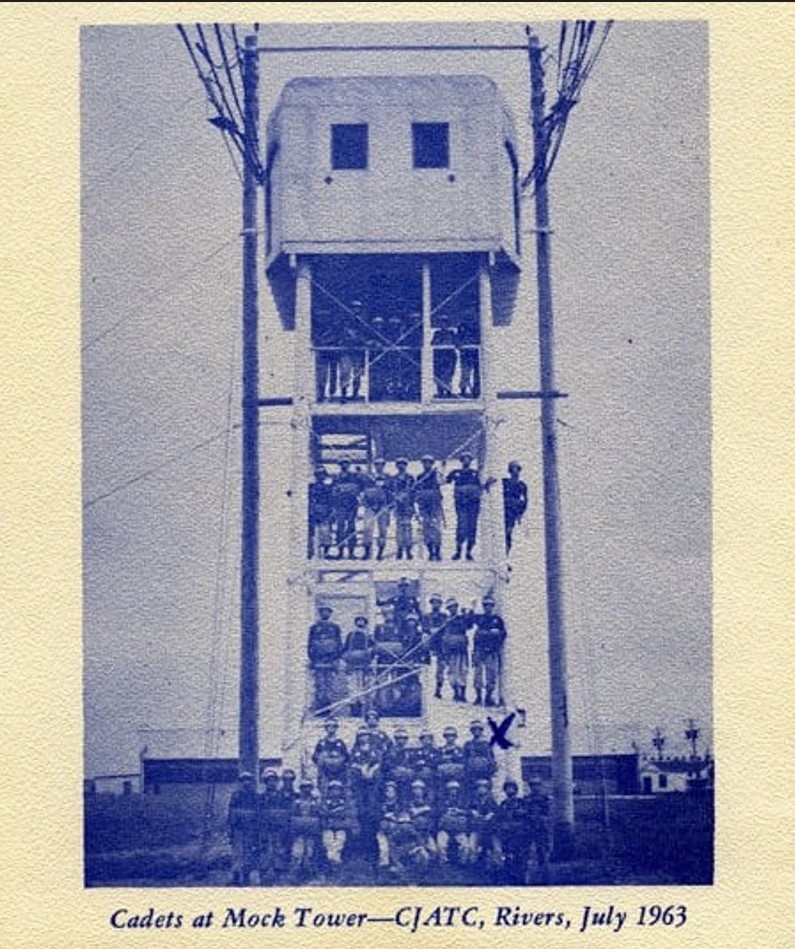
The Mock Tower
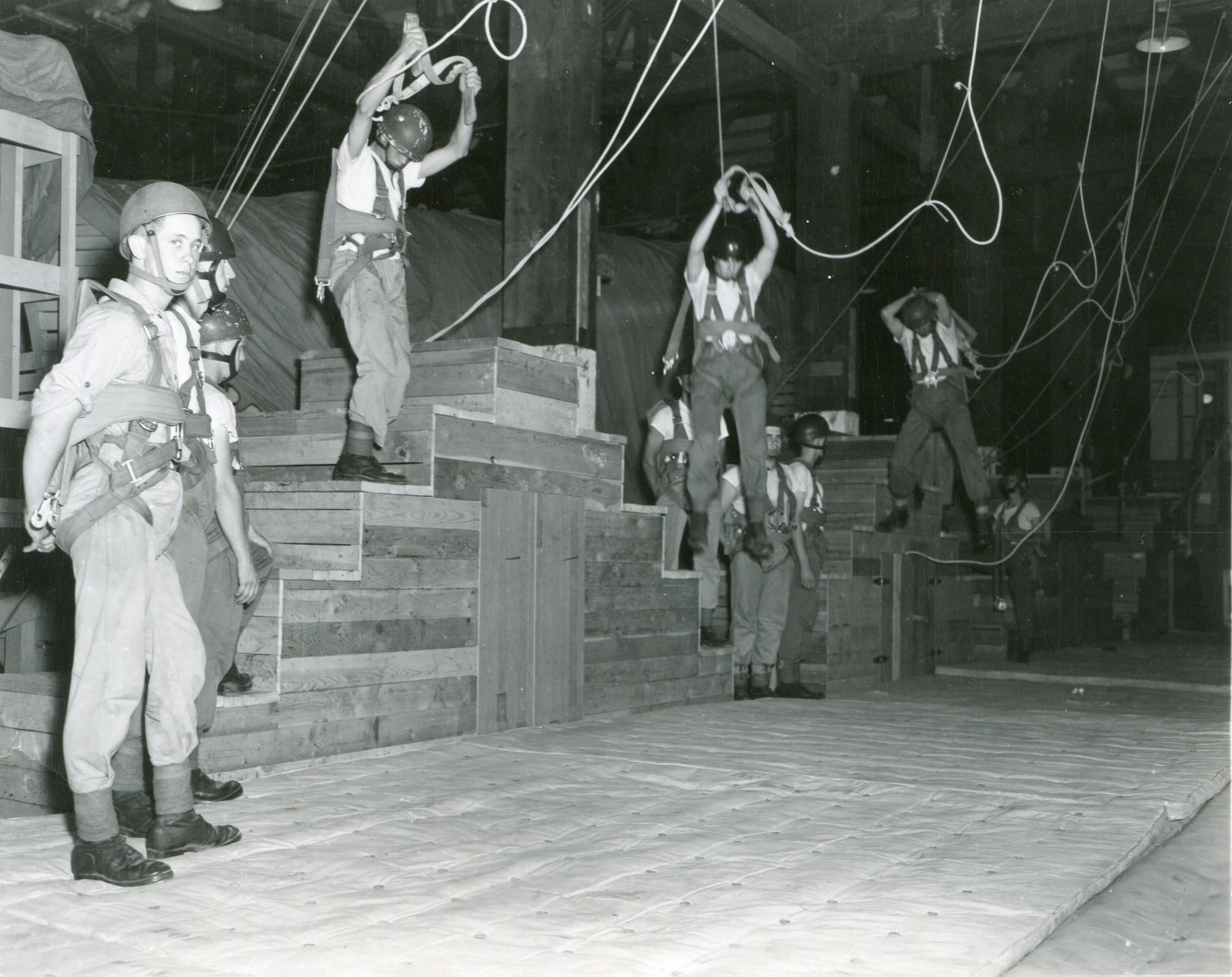
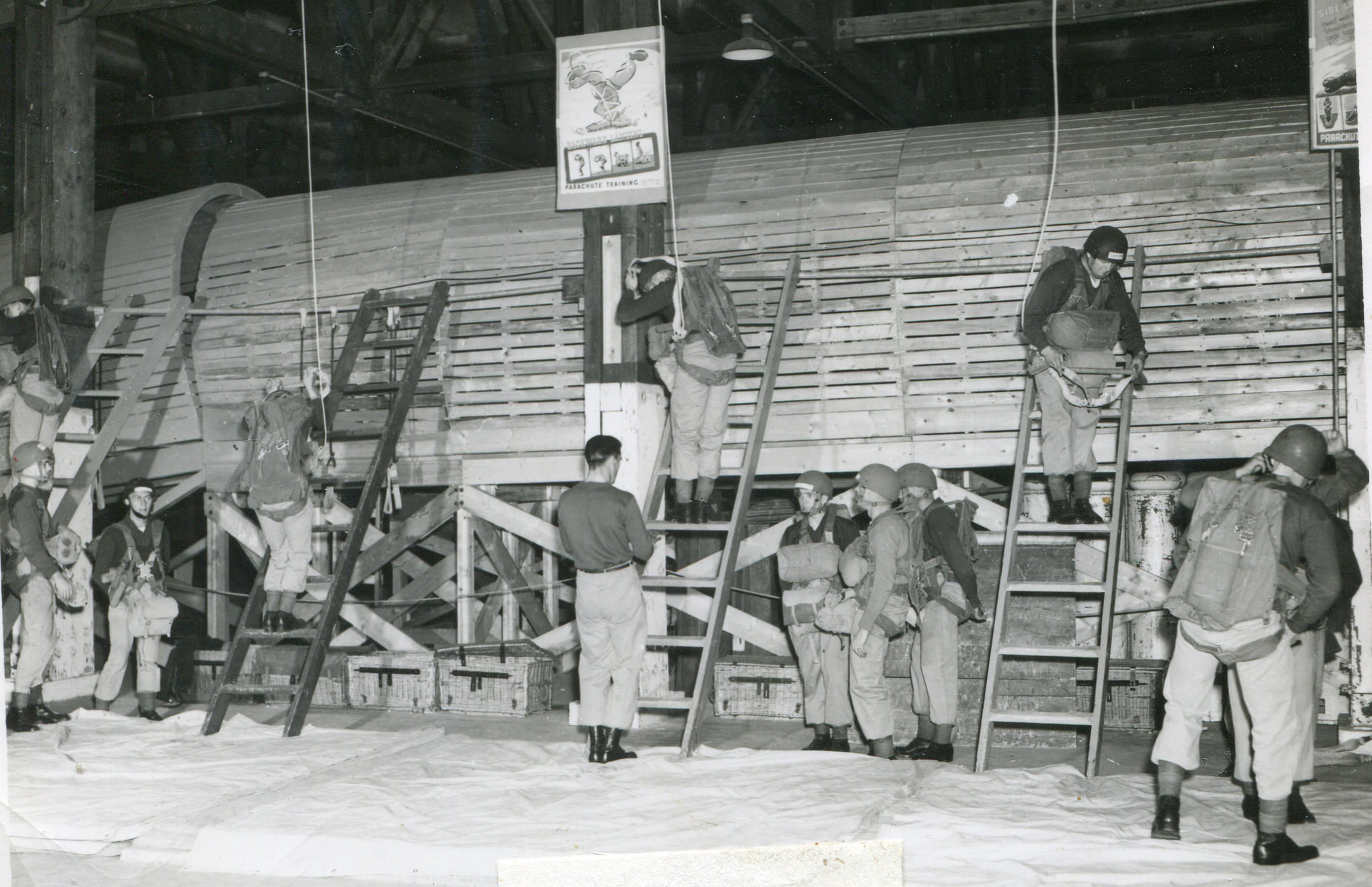
After first learning how to roll on landing from elevated stands the students jump from the mock tower. From this 32 ft. high device the students are carried by sloping cables to the ground some distance away.
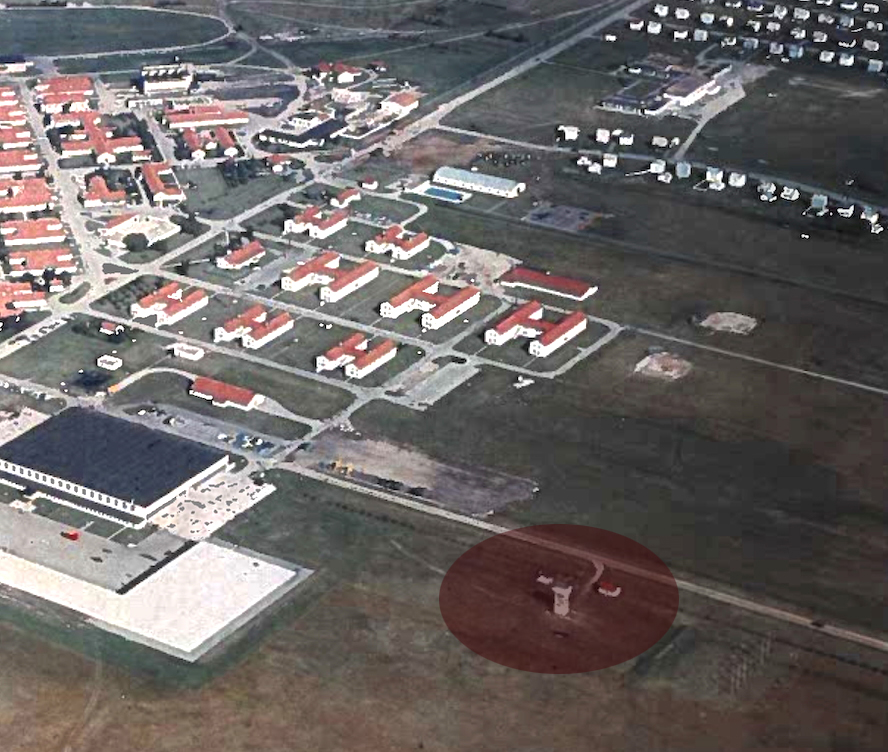
Following this, the potential paratroopers jump from the 150 ft. high tower at Camp Shilo which is a very realistic comparison to an actual aircraft jump.
Airborne Training
Ultimately, the paratroopers jump fully equipped from C-119 aircraft maintained at CJATC for this purpose.
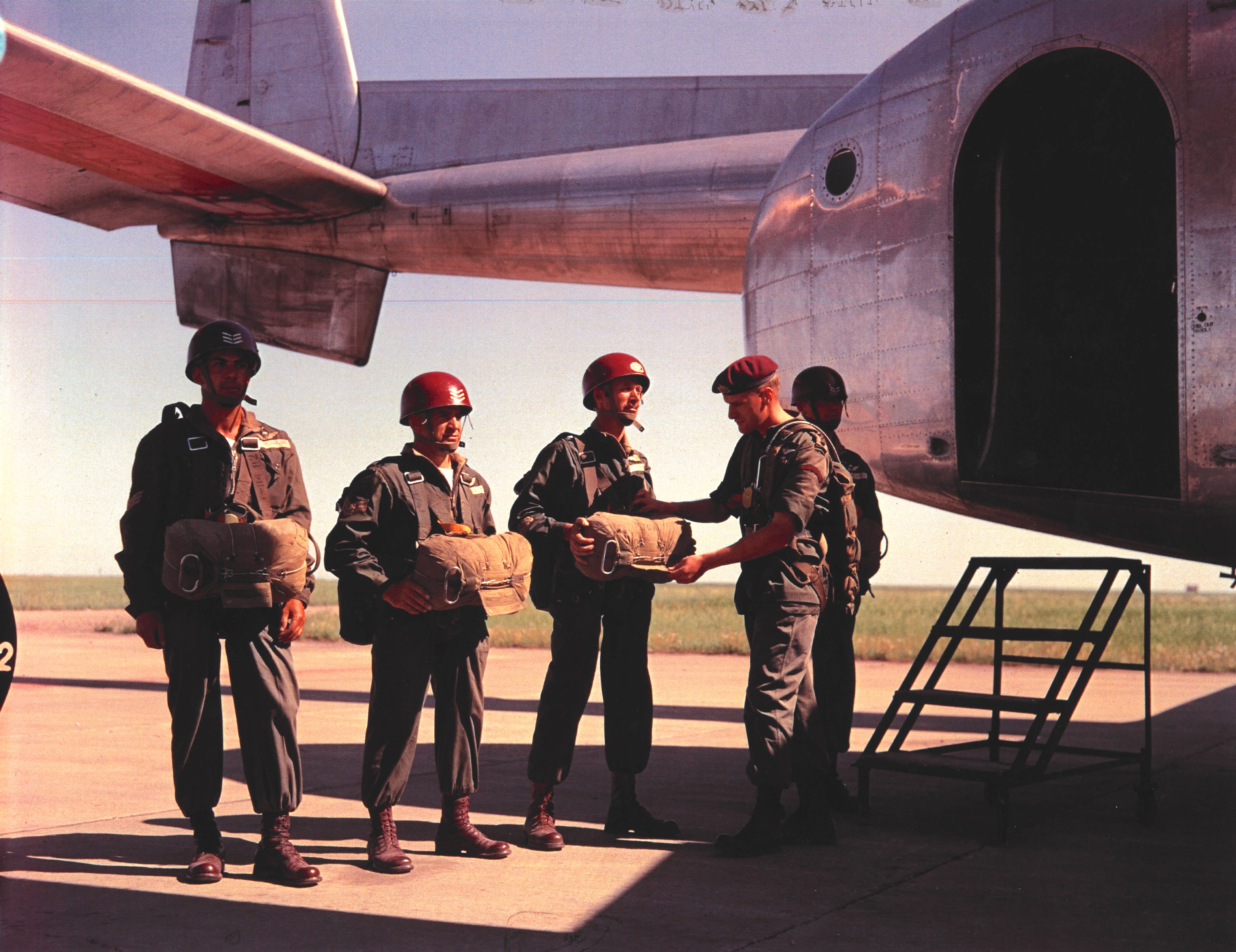
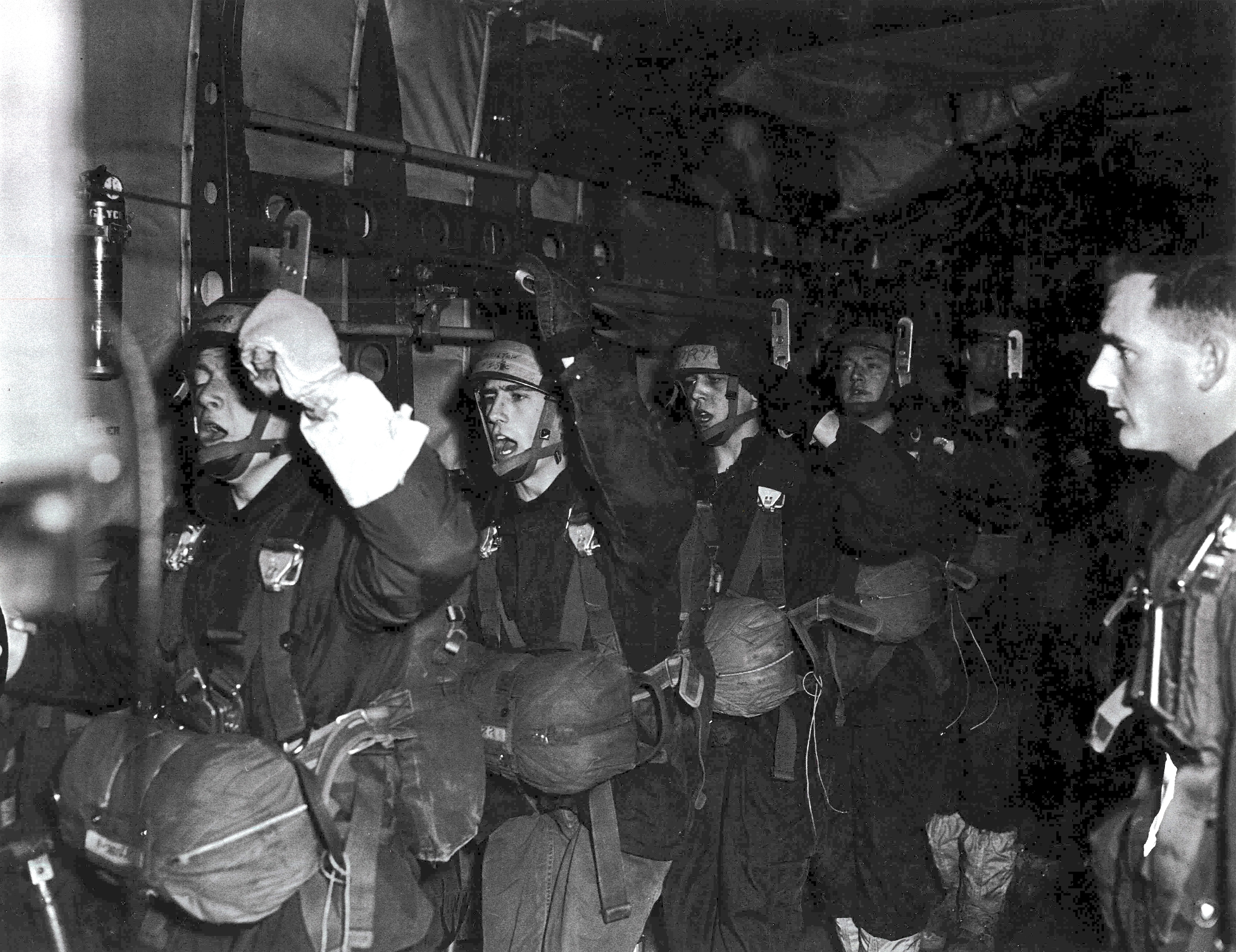
More than 13,000 paratroopers have been qualified by the airborne school since 1947. Including those made on advanced and instructors’ courses, more than 100,000 jumps have been made at CJATC.
A somewhat different record was set by a student jumping from the high tower at Camp Shilo. On his first descent, he landed on top of a lecture room; on his second descent he became entangled in the high tower structure; and on his third descent landed in a somewhat thick bush. However, he was not easily discouraged and eventually descended in the proper manner and completed his airborne training successfully. Soldiers jump from the 32 ft. "Mock Tower" at Rivers before graduating to the "High Tower" at Shilo, and then actual jumps.
NOTE: The previous information comes largely from a report by Squadron Leader C.L. Heide, DFC.
A Jump Course memory by Gerry Logan
"...we started our jump course with 58 people and when it was all finished we were cut down to around 40.... we didn't wear battledress tunics, web belts, or ties, and didn't have a name tag, as I remember we wore coveralls, boots and putties and always a harness...,
our course began on a Tuesday morning after the Thanksgiving day long weekend as Rivers was lucky enough to have a freak snowstorm the day before, we had about 6 or 7 inches of snow on the ground, however when we did the 5 mile run on the Friday morning the snow was gone and the temp was up around 80 degrees, we had reasonably good weather right up until the last day that we were at the high tower in Shilo, it snowed a bit through the day and they were trying to get us finished at night but a storm was coming up fast and the winds were pretty high for the tower, especially doing a night drop, I know when it came to my turn they called it off so we went back to Rivers, you and I were living in quarters so we didn't travel with the rest of the course and you drove us back to Rivers that night, we managed to get our first 2 jumps in, then the weather turned bad and we spent a good 2 weeks trying to finish up with the required jumps, our course took about 6 weeks when it should have been over and done with in 4.. "
A Memory from Michael Czoboka
In 1947, RCAF Station Rivers became Canada's main para-training centre. The Army Aviation Tactical Training School was established to provide pilot training to Army aviators, as well as helicopter instructor training for the Army, RCN and RCAF.
Community Memories
For people living and working on the Base, the Parachute training exercises were one of the more obviously visible activities. Many people remember watching.
Diane Ali
"We passed that every morning on the way to school and loved it when they were jumping, looked like fun to a little kid."
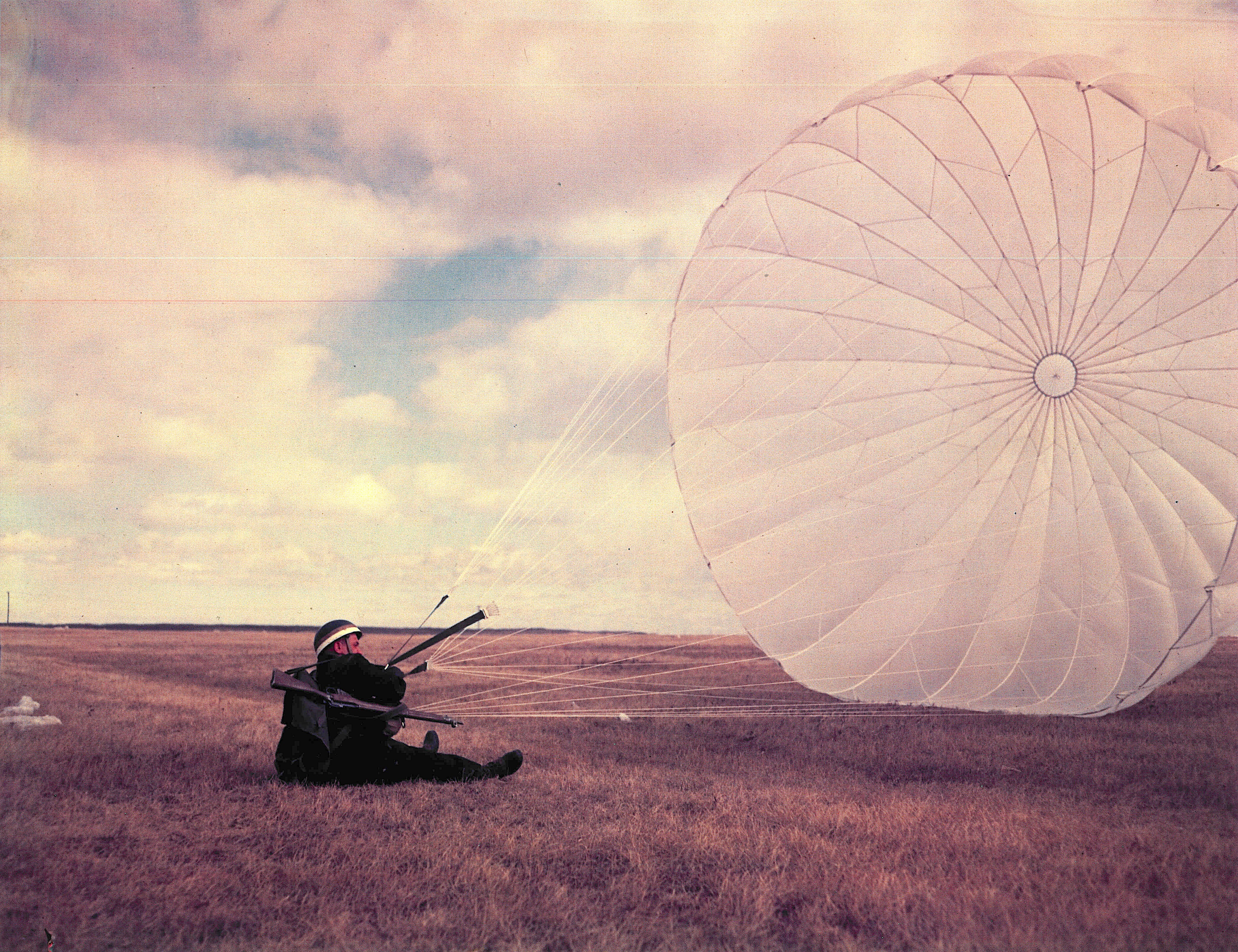
We lived on a farm South of Wheatlands and Every once in awhile the jumpers would land in our field and then whoever had to come pick up the guy and sometimes, they left the chute and started walking back. Later a truck came and picked it up.
Dora Irvine
"I used to drive by it (the jump towers) as a child and see it up close because I worked for Airborne."
Karen Blackwell
"Watched my dad many times at the tower. Remember it vividly. So proud he was a paratrooper."
Ronald Anderson
"Remember it well, I worked at variety store (Canex) and sold Greb jump boots to the paratroopers, couldn't keep them in stock."
Mike Borody
"Major jump out of “flying boxcars” at end of training, sky was filled with parachutes!"
Rod Pearson
"I remember the sky was full of paratroopers when they were practicing. It was so neat to watch."
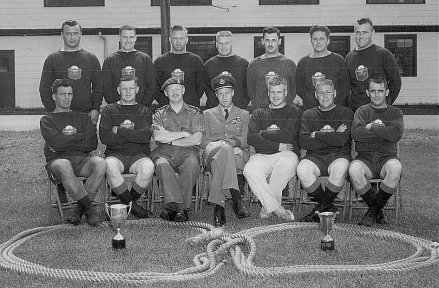
John Raulston Saul, a well known Canadian writer and intellectual has a sentimental attachment to the region having lived for three years as a child when his father (seated - centre) was Commander of the Parachute School.